Thursday, June 7, 2012

life in a mental sandcastle

Newspapers.  Magazines.  Facebook.   TV.  Radio.  Internet news... all the main sources where people usually get their understanding of the world.  They are all basically ethereal.  The opposite of permanent.  Who wants to read last years "Time magazine"?  Last week's status updates?  Its all disposable.  By their very nature, they draw our attention towards impermanent things, and away from permanent things.

What about books, you might say?  They are permanent, right?  I know someone who shows up nearly every day reading a different book.  There is something like a million new books or new editions published each year.
"Oh well, we can always make another one!"

How can we ever have a lasting thought in this environment?

What if we needed to think very big, sophisticated, long-term thoughts?  The very kind that might be needed to address big, sophisticated problems like the many that our world faces today?

It's like a giant tide of text and images is constantly washing over us.  And it makes us all dumber.

The problems that our world faces today, are deeply complicated, very inter-related, and have been brewing over decades, and in some cases, centuries and even millennia.

It seems sensible, that we may need the apparatus to brew solutions to these problems, solutions of comparable sophistication, over similar timescales.  Actually, Einstein suggested the solutions may need even deeper thought, when he famously said, "Problems cannot be solved by the same level of thinking that created them."

What could help us focus our attention on this long-term, slowy evolving train of thought?  Well imagine there was one page in the newspaper, that listed the biggest problems and threats the world is facing today.  It might look a bit like the stock listings page.

But it would almost never change.  And that itself, would be the most important news in the whole paper, every day.

Now imagine it was cross-referenced with who are the major actors focused on these issues, what their stance is, and what actions they were taking.  And crucially: what do their critics say about them?  (Otherwise it would be very easy for the spin doctors to make it sound like "this administration has everything is under control").  Yes, it would need to be updatable, but it would need to be resistant to spamming as well.

The main "news" each day should be, what progress is being made on these issues today?

"Built to Last"
The main discussions between intelligent adults should be, how is that project going, that whole "ensuring a viable future for our grandchildren" project?  (Remember that little project?)

What else really matters?

Of course, many people I know, care deeply and have these types of conversations all the time.

But it strikes me that there is a real lack of a systematic approach.

Without that, we may be children content with making new sandcastles every day, knowing but not caring that they will be gone by sunset.  No criticism to the child who plays this way, after all, when they are done on the beach, they know they get to go home to their parent's sturdy home.

As adults, we don't have that same luxury, this is the world our grandkids will inherit.  (Depending on your world view of course).

Attitudes towards Changing the World

Can we affect positive change in the world?  Should we?  If so, how?  There are many different schools of thought.

Here I tried to group the views into categories, and took liberties naming each one:
  • Part-time Samaritan: Take action in the outer world, in small ways
    • Small actions in daily life.  Clean up litter, smile at someone, help an old lady across the street.  Every little bit helps
    • Give some time or money to volunteer or contribute to organizations you believe in:  Save the Children, Greenpeace, church missions, etc.
    • Eat organic food, recycle, buy an efficient car
  • Dedicated Samaritan: Devote your life to positive change
    • Be a activist for political, environmental, social issues
    • Actually enter politics for ideological reasons
    • Create positive/green technologies
    • Medical missionaries
  • Yogi: Seemingly Outer problems are actually Inner/Spiritual problems
    • Meditate/Pray and all will be well
    • Sort out your own life and all will be well
  • Fatalist: You can't change the world, it is screwed
    • Hopeless Fatalist: That sucks because its really important, or
    • Abstract Fatalist: That doesnt matter because the world is only illusionary / temporary / meaningless
    • Lazy Fatalist: Its just too much work to do anything about it
  • Lazy Optimist: You can't change the world but it will be just fine
    • Spiritual Optimist: God/Great Spirit will take care of it, or
    • Natural Optimist: It will take care of itself, mother nature is too vast for us to permanently harm
I can fall into most of these, depending on the day and mood.

My feeling is, each of these may be part of the solution in some way (except for Fatalist, that just seem like pure fail).

Does your view fit here?  Is there anything missing?

Wednesday, June 6, 2012

the roots of good and evil

People mean very different things when they talk about a bright future, maybe including:

  • good education
  • financial security, economic prosperity
  • good physical health, healthy children
  • peace and safety (no war, low crime)
  • an ecologically healthy planet
  • technological progress
  • benign government, "freedom", self-determination
(Each of these has its dark opposite:  failing in school, going into debt, losing your health, being subjected to crime and war, etc.  And of course these are just top level items.  Under "ecologically healthy planet", we need to consider ocean life, biosphere, water table, insects, mammals, atmosphere...  Of course, it is a giant kitchen-sink type list...)

And is it just a random list?  Is there some kind of priority?  For example, how can we be healthy if the air and water is polluted, or worse, radioactive?  

Maybe these should be numbered, so we can focus on the most important first.  

What's more important, health, or peace?  Well its hard to stay healthy if you're constantly getting shot at.  There is no point building hospitals, if they just get bombed right away.  We might say in some sense, health depends upon peace.  

Of course its not so cut and dry.  Even if there's a lot of crime or war, we still need to do our best to combat disease and provide nourishing food.  But it seems to me there is some kind of precedence here.

What if we listed all the big problems our world faces, and thought really hard about what depends on what, and what causes what?  Then we might be able to reason about what the root causes, and root solutions might be.

Some people call this type of thinking a "dependency graph", which is a fancy name for a bunch of bubbles representing things (problems/solutions), and arrows between them to show "A causes B", or "B depends upon A".

In the graph shown, it looks like 276 at the top, is a "root issue", and 666 at the bottom is a "leaf issue".

If we put all our energy into solving issue 666 at the bottom, well congratulations, we solved one issue.

But if we put all our energy into solving 276 at the top, we can help solve all the other issues.  And in fact, its the only reasonable way to tackle all the problems as a set.

This might be easy if the graph is small, but if we are considering the real big issues we face as a planet, we are talking about a rat's nest of issues: thousands and millions of issues with even more dependencies. Consider the graph on the left, and multiply by 1,000,000.

To make it worse, its all a matter of opinion.  Some people might not think that polar bears dying is really a problem, and some might think that a certain war is actually a good thing.  Some might say the root cause is obviously the fact that everyone isn't Catholic, or Muslim, or whatever, and others might say, its all due to fiat currency, or Coca-cola.

So, the graph is really a detailed representation of the opinions of the people who construct it.

Ah, now we are getting somewhere.

So, what do you think are the root problems?  Are there root problems?  Root solutions?

The purpose of this post, is to draw attention to the roots.  

Our best chance, is to spend more time and energy and conversation and thought, on identifying, and addressing, the true roots of the matter.

Otherwise we are just plucking leaves.


The Future: Inviting or Foreboding?

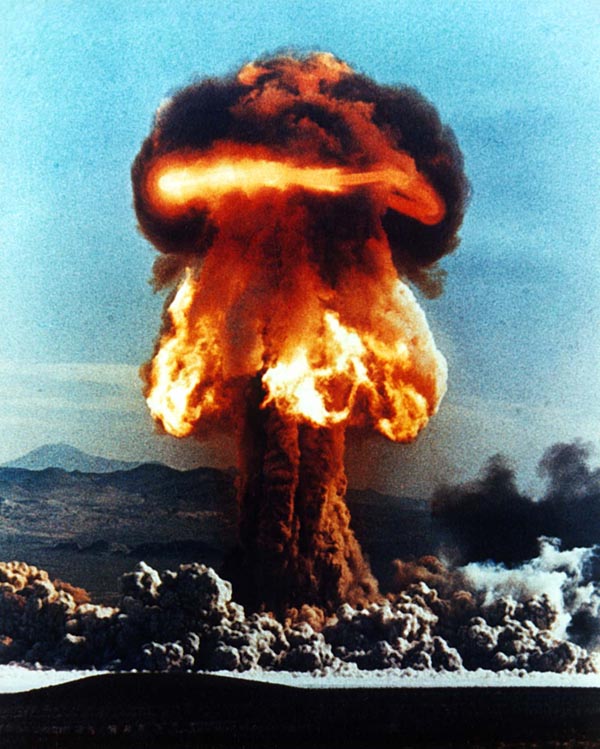
During my childhood, it was the Cold War.  I watched "The Day After" when I was 9, while my parents were out.  That's some pretty heavy stuff.  In middle school, I read all about the details.  Warheads, ICBMs, stockpile sizes, megatonnage.  False alarms.  Radiation types, doses, effects.

I was a brainy kid, and I wasn't happy.  It seemed to me, one small slip, and the world was toast.  But why were all the adults not worried about this?  Why was everyone walking around like everything was normal?

"DON'T YOU PEOPLE REALIZE THERE IS A GIANT FLAMETHROWER POINTED AT OUR WORLD?" I wondered?  Why wasn't that the main priority?  Were the grownups all crazy, or just stupid?  Didn't they know?  I fretted.  So I asked my Dad about it.  Was he worried?

He said something like, "Son, I trust in God."  He was just trying to pay our bills.

At that moment, I realized he had no answers for the big questions.  He couldn't save us.  Could God?  I really wasn't sure.

The years passed, and the Cold War drew down.  The nukes were still there, but there were other problems to focus on:  The ozone layer.  Deforestation.  Massive air and water pollution.  Oil spills.

In my mind, the future had giant, dark clouds over it.

--------

Fast forward:  I'm a father of two amazing boys.  The oldest one is the age I was at the beginning of this post.  And since then, it hasn't gotten better.

I want a bright future for my children, and theirs, and for the world they will live in.  Not in the same way that I want a new car, or a vacation, or even good health.  I mean, if I could trade everything for that, every single thing, even if I have to live in a cardboard box and eat woodchips,  it would still be a good trade.

And yet, I spend most of my energy, just paying the bills.  I realized I needed something to help me focus on the bigger picture, bit by bit.

So this blog is dedicated to The Future: the dark side, the bright side, and what we might do to tip things the right way.

They deserve it.