Friday, March 22, 2013

social change is like fire building

I'm a city boy, used to air conditioning and central heating.

So when we moved to rustic Robert's Creek, the wood stove was an enigma.  Each morning the woodpile, axe, stove, and cold home mocked me.  I struggled to light the fire each morning for what seemed like ages.  Though its still not as easy as I imagined, I eventually got better.

Roberts Creek is a living postcard, and we would like to keep it that way
Another big theme here in Robert's Creek, is social change.  For historical reasons, this place has for decades been home to environmentalists, libertarians, activists, and very outspoken citizens.

Gazing into the flames and embers (we don't have cable), this analogy pretty much wrote itself.

There are a few key factors when lighting a fire, that make the difference between the warmth of success, or the bitter coldness of failure.

Fire building is an art ripe with metaphors

Goal: Our goal is to encourage the spread of energy to make a transformation, for better living conditions.

Thermal energy vs social energy.

Safety: We need to keep things under control, this energy is useful but can also be very destructive.

Social change can be risky.  The same social forces that can push for positive change, can easily turn ugly (like a peaceful protest becoming a riot).  Be aware of the dangers and take precautions.

Heirarchy: Ideally lighter lights paper, which lights kindling, whichlights smaller logs, lights bigger logs.

Don't try lighting a log directly with the lighter, intermediaries are important.  Stretching our analogy, beginning activists probably can't directly change our most conservative institutions, though through a sequence of steps change may be possible.

Readiness:  Some logs are simply too wet to light, they need more seasoning.  Putting them in the stove endangers the whole operation.

Some people/organizations are wet towels.  Identify and work around them.  Engaging them at the wrong time can send you back to square one.

Proximity: Two burning sticks on opposite ends of the stove are not useful.  The hottest bits need to kept close so they encourage each other to burn.  Sometimes a centimetre can make a huge difference.  

The trailblazers need to get together to get things started.  Sometimes it is the only way.

Air Flow:  It is critical that there be enough space between the logs to allow airflow.  I was amazed to find that a centimetre can make the difference between warmth and failure.

There is a fine line between getting close enough to collaborate, and crowding each other out.

Sunday, March 17, 2013

bridging the gap from tame to wicked

In our last post we introduced Wicked Problems.  How do we bridge the gap between solving the small, tame problems we are used to dealing with, and the big wicked ones?

How do we go from tame to wicked?


Lets brainstorm a few ways we might get started:
  • Baby steps: Tackle an issue at the edge of a wicked problem, which might be solvable with technical means alone.  Then after establishing a beachhead, proceed deeper into wicked territory.
  • Cross-domain socializing: Network with people in the various fields where the wicked problems live, to gain a better understanding of the issues, and also make contacts with complementary skills.  Exchange time or skills.
  • Top level: Take seriously the identification, analysis, and prioritization of these types of problems.  Learn more about what they have in common, and what issues underlie them.
  • Meet the players: Look at organizations who are already dedicated to solving such problems.  Try to understand the strategy and scope of their work.  How do they fit in the whole picture?  What is missing?
Are there more?

Wicked problems

The very hardest problems our world faces are often lately called "Wicked Problems".  From Wikipedia on Wicked Problems:
Real life wicked problems make 10,000 piece puzzles look like a cakewalk
"Wicked problem" is a phrase originally used in social planning to describe a problem that is difficult or impossible to solve because of incomplete, contradictory, and changing requirements that are often difficult to recognize. The term ‘wicked’ is used, not in the sense of evil but rather its resistance to resolution.[1] Moreover, because of complex interdependencies, the effort to solve one aspect of a wicked problem may reveal or create other problems. 
... 
Classic examples of wicked problems include economic, environmental, and political issues. A problem whose solution requires a great number of people to change their mindsets and behavior is likely to be a wicked problem. Therefore, many standard examples of wicked problems come from the areas of public planning and policy. These include global climate change[5], natural hazards, healthcare, the AIDS epidemic, pandemic influenza, international drug trafficking, homeland security, nuclear weapons, and nuclear energy, waste and social injustice. 

How do we start solving these problems?

I spent a bit of time googling for approaches to solving these rat nests.  Most of the writing I found about wicked problems, discussed their characteristics in depth, but at most gave a few lines of platitudes about how to solve them.

Lets look at them a little more closely.  What do their characteristics imply?
  • Vague / incomplete / changing requirements
  • Complex interdependencies
  • Economic, environmental, political issues
  • Often requiring a great number of people to change their mindsets and behaviour
  • Many standard examples of wicked problems come from the areas of public planning and policy
These hint at what we will need to tackle them:

First and foremost, we need effective multidisciplinary teams.  They will need real skills in the domains where the wicked problems live:
  • economics
  • environment
  • politics
  • public planning, and policy
 We will need help from other domains to solve them.  To influence mindset and behaviour on a large scale we might want:
  • marketing, social science and psychology, social media
  • internet, mobile, and communications technology

Where are the wild things?  Messy fields like economics, environment, politics, and planning!

Next, we will need to deal with complex dependencies and changing requirements.  This calls for strong Management and Project Management skills.

It's clear to me why most startups focus on solving a small technical problem instead of one of these monsters:  it's way easier and less risky, you dont need an all-star multidisciplinary team, and you can get started without the type of funding it would take to support such a team.

So there is this huge gap between problems a small specialized team can handle, and serious wicked problems.  How do we bridge that gap?  Lets look at that in a followup blog post.

Friday, March 15, 2013

what happens when you blog

Why do I write?  

When I started, I wasn't sure.  I had thought the purpose of writing about ideas was to disseminate them, but having modest ideas and a very small readership, I wondered if this was pointless.

Now I realize, it is primarily to clarify my thinking.  

I find the act of writing publicly forces me to be much clearer, and follow my thinking to its conclusions.  It also lets me connect various observations in a more complete way, than if the ideas were floating in my mind.  Because when you write, loose ends and muddy thinking are obvious.

Writing helps crystallize and clear your thinking.
Now I've got a series of posts in which I present a complex problem, and claim that I will address the solution in a future post.  But guess what?  Im not sure just what Im going to say in the followups yet!  But the act of publicly stating I will present a solution, is making my gears turn.

What do I write about?

In this blog, I've covered abstract and concrete ideas like:
Most of these are rhetoric pieces, intended to share a viewpoint based on personal observation.  My hope is that the act of writing them will help me find my place in contributing to the solution to the big problems clouding our personal and collective futures.

Public writing -- I highly recommend it!

Thursday, March 14, 2013

untangling the knot: first steps

In the last post we looked at various reasons why the modern humanity finds it so hard to halt environmental destruction of the earth.  We noted these reasons link together to form a tangled knot, making any progress difficult.

Lets gather up our courage, and look at this tangle in a little more detail.  Does it have some high-level structure?
The gnarliest knots can take a suprising amount of patience to untangle
The different categories of issues call for different approaches.  For example:
  • Business issues: changes in regulation and taxation
  • Political/Legal issues: political and legal reform 
  • Technology: massive investment in sustainable energy
All of these are deeply interlinked, forming a very tight sub-knot which is very hard to influence from the outside, and some might say, hard to change from the inside.  Hence the phrase "military-industrial complex" referred to by Eisenhower, which also should include politics and the legal system (it has also been called the "military-industrial-congressional complex").  Other actors in this knot include multinational corporations, and the finance industry.  For now we will call it The Complex.

The Complex is predictably destroying the planet, and it doesn't want to change.
How can we improve this picture?
There may be a way to effectively untie that sub-knot, and there is always a lot of discussion on how exactly to do that.  Some people protest the Complex, some join it to influence it from the inside, some try to live without it as far as possible.  But the Complex is hard to influence on a personal level, unless you find yourself as one of the elite in terms of wealth or connections.  We will leave the internals of that sub-knot aside for now, we can discuss that more in a future post.

However there are a number of the issues mentioned in the last post, which are outside the scope of the Complex, which I will call Human Factors, including human nature and cultural causes:
  • Inability to notice slow change, 
  • Future discounting, 
  • Discouragement, 
  • Modern attention deficit, 
  • Sheep syndrome, 
  • Lifestyle inertia, 
  • No precedent, 
  • Ignorance, 
  • Magical thinking
For details on each of these, see the last post.

These are things we cannot blame The Complex.  After all, our human nature is what produced this Complex and the problems it created.  That means we can address these without depending on the Complex changing first, which means we have a real chance of making progress.

Our current predicament is partly a natural result of human nature
One thing we have been reminded of recently with the Arab Spring in the middle east, the grassroots defeat of SOPA in the US, and the anti-rape movement in India, is that broad popular opinion is still an incredibly powerful force for change.

Popular support is needed to make the needed changes.

Understanding these quirks of human nature, is key to building popular support required for meaningful change.

These quirks of human nature can be, and must be, counteracted on a cultural level.  In fact we could consider a purpose of culture, to be a counterbalance to our instinct and human nature to allow us to live together, and now, survive together.

And this is the level we all have access to:  writers, artists, musicians, film makers, journalists, scientists, engineers, whether professional or amateur.

Only the tiny seed of understanding can produce a vast forest of wisdom 
We need to infuse culture with key wisdom and tools, as cultural antidotes to the plague of media:

1) Educating on the basic facts of environmental impact.  We don't want people thinking that if they just recycle their bottles and buy green detergent, they are pulling their weight.  There is broad misunderstanding about basic ecological facts, the current rates of destruction, and just how quickly and dramatically the earth will change if we don't change course.

2) Increasing people's capacity to imagine how things will end up if we don't change course.  This calls for artists to depict life in the future in an environmentally ravaged world, including books, visual art, and (most compelling) cinema.

3) Establishing counterbalances to tendencies like short attention span, future discounting, etc.  with appropriate tools and media.

4) Counter modern people's tendancy to passivity in politics.

5) Focus on psychology research to deeply understand people's ability or inability to handle long term problems and find applied solutions.

Cultural artefacts, values and assumptions, can influence each other
The goal here is to influence culture with compelling cultural artefacts, backed by science, that inspire specific change in attitudes and behaviour, to help foster a wiser populace, and aimed at the people who need it most.

That last point is critical.  Far too much progressive media is aimed squarely at "the choir", those who least need the message.

Instead, we need messages couched in the context most accessible to those furthest removed from awareness of these problems.

How would the greatest polymath minds of all time
approach the current environmental crisis?
So in summary:
  • The many barriers to progress on environmental issues, form a tangle that has a simple high-level structure: Human Factors, and The Complex 
  • Leaving aside for now the difficult restructuring of the current political, business, finance, military, and legal Complex, we can always make progress with Human Factors: people's attitudes and behaviour, which is the root of these issues in the first place 
  • To be most effective, this work should be strongly supported by science, and couched in terms most accessible to those who most need to hear it.
What could be the anti-dote to years of propaganda, double-speak, advertising, and junk fiction that we are exposed to?

Sunday, March 10, 2013

tangled knot of environmental doom

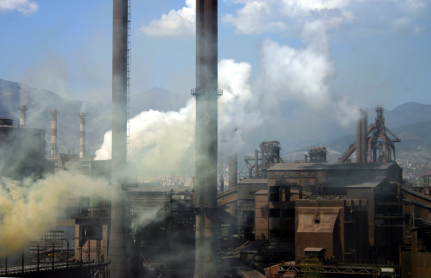
The current global environmental crises have been brewing for decades.  Its clear they are on track to getting worse in coming decades.  Air, water, land, and life itself are all under constant and growing threat from chemical and nuclear pollution.  We are watching a slow, predictable train wreck, and we are not doing that much about it.

Why do we not have the political will to prioritize "the environment"?

So why is halting the destruction of the basis of all life, not the top political priority worldwide?  We are we as a species not doing everything in our power to stop and reverse this trend?

Sharks are pretty scary, but environmental destruction should scare us all far more than it does.  Why is that?

There are a number of reasons.  Since this is a question of paramount importance, lets us try to list and categorize the possible reasons.  There appear to be Political, Cultural, Business, and Technological reasons, having to do with the current state of society, as well as Psychological/Biological reasons which are more to do with innate human nature.  The many reasons reinforce each other forming a tangled knot, which itself discourages people from making progress.

Who wants to untangle this thing?

Psychological / Biological

Immediate survival needs overrule everything: poverty. hunger.  disease. security.  When people are not certain of their own immediate survival, the environment naturally takes a back seat.  Much of the world is in this position.

Inability to notice slow change:  Humans are good at noticing something moving in the trees, but not at noticing trees growing.  We are designed to pay most attention to a certain timescale relevant to our biological design and lifespan.  Problems that creep up on us at larger timescales are hard for us to even notice.

Future discounting:  Psychologists know humans naturally think the future is worth less than now.  It's harder for us to care about things that will not unfold fully for years to come.  Perhaps the selfish subtext here is, who knows if we personally will even be alive in 50 years, so why should we personally care about the state of the world at that time?

Discouragement:  It is natural for people to be discouraged in the face of giant problems when they feel they have little leverage.  The interlinking of all these other reasons contributes to the perception that this giant tangled knot is too big to solve, so there is no point putting personal energy into it.

Cultural

Modern attention deficit + media content overload.  Modern media seems almost designed to shorten our attention spans.

Sheep Syndrome, Lifestyle Inertia: Most people aren't used to trying to change the course of things.  And they are not good at voluntarily changing their lifestyle, on either personal or collective levels.

No precendent:  This type of scenario has never occurred before.  In the past, spoiling one's territory was never truly fatal, since there was always somewhere else to go.  But with the crisis is at a global scale, there is no where else to go.  There is no cultural playbook for this type of scenario.  This is the first time that we must work together as a species to avoid mutually assured destruction.  We have to overcome thousands of years of competitive conditioning to save the commons.

Ignorance:  Many people are still not aware of the certainty and ugliness of the expected outcome.  Even people who do say they care about the issue, may not be able to fully visualize what the expected outcome for the planet will be in, say, 50 or 100 or 200 years from now.

Magical thinking:  Some religious people assert that environmental destruction is not a concern, or is even desirable.  For example, those who believe in the Rapture.

Excessive Consumption:  Our modern lifestyle requires more energy than ever before, and more people than ever before are acquiring vehicles and appliances.  Meat production eats up vast agricultural resources.

Political


Political structures:  Current political structures (non proportional representation for example) make these issues harder to gather will for.

Propaganda, Misinformation, Corruption, Corporate influence on policy: Industries that benefit from the status quo, use and abuse their power to influence populations, leaders, and policy.

Business

Discounting the commons in the price of products creates perverted incentives.  For example, the price of products does not include the environmental cost of pollution from manufacture and shipping.

Financial markets focus on quick gains at the expense of the long-term.

Competitive pressures make environmental choices relatively more expensive.

Industry already has a massive investment in dirty, inefficient technology.

Fusion power holds promise but remains a distant goal


Quantum-leap clean technology like large-scale fusion power plants, are often too expensive for the private sector.  Public sector support means it requires political will, which is the root issue here.

Transitioning the world economy to clean power is not going to be easy.  The sheer size, vast cost, and scope of new science and engineering required to clear this hurdle itself discourages change.  Vast political will must be brought to bear to affect meaningful change.


Ok, Now what?


Many people care about the crisis, and are taking a variety of approaches to contributing to solutions.  However it is rare that anyone addresses the whole tangled knot.  Generally, environmentalists, activists, and concerned citizens focus just on one aspect, and then get discouraged when they realized progress is much harder than expected due to the entangled issues.

Now that we have looked at a broad range of reasons for the lack of will to tackle the environmental crisis, we can start looking at solutions in a coming post.  Stay tuned, and lets shine some light to make a brighter future!

Friday, March 8, 2013

Professional Citizens

We talked about some ideas for lowering barriers to citizen participation in the last post.  And we floated the idea of treating the citizen's civic job seriously, as serious as that of any sophisticated profession in government, business, academia, or the military.

They would typically have at their disposal:

  • Trusted advisors to give them the best analysis.
  • Systems to provide them accurate information.
  • The ability to delegate action and representation.
  • The resources to do their job (supplies, transportation, etc).
The voucher concept from the last post might cover the final point (resources), but analysis, information, and delegation are missing.  Without these, how can a citizen possibly hope to stay informed?  How can a citizen possibly hope to participate in the many relevant meetings, campaigns, demonstrations, and other events that are relevant to their civic duty?  It is impossible.

 *  *  *

Most of us have friends who are more politically active than us, or who have more expertise than us in certain areas.  What if we could delegate part of our political power as citizens, to these people?

I know friends whose opinion I agree with, and who attend public meetings and protests far more than I can.  I want to be able to assign them as my delegate. When they go to a public meeting, I want them to be able to carry my political weight with them, if I am busy that day or choose not to attend personally.  And I want that act of delegation, recognized by the government officials.  Just like delegation by busy CEO or government officials.

Delegation allows us to be in multiple places at once, avoid excess travel and expense, and even be active while we sleep!
This concept is partly described by the term Delegative democracy or Liquid democracy: the idea that we should not only have a vote, but the right to delegate that vote.  Stripping us of the right to delegate (as the current system has done), results in the massive Citizens Burden which makes our job impossible.

If citizens can delegate, then:
  • Issues like transportation, child care, and time off work become much less important.  If 100 citizens can send one delegate, these barriers become much easier to handle.
  • The issue of access to the best information is largely solved: we simply pick the person we trust who already is an expert at staying informed.
But more specifically, I want to see this delegation to be topic-specific.  Just like the prime minister has a cabinet of ministers she trusts to handle specific domains.  We citizens should have our own cabinets to advise us and act on our behalf in their area of expertise.
Every citizen should be able to have their own hand-picked Cabinet
For example, I would trust my one friend A on issues regarding censorship and digital rights.  If they were to sign a petition on this issue, I would trust them enough to add my name too.  But I don't have time to read an understand every petition on this issue.  I wish I could lend them my name, for the single purpose of representing my interest as a citizen, on issues of censorship.

I have another friend who I totally trust on issues regarding food and agriculture.  I wish when she called up an elected representative she could state her opinion and say "...and I represent Robin and 55 other people on this issue".  I want the elected official to unequivocally know that this one call represents 57 voices.

So in summary:
  • The Citizens Burden makes it difficult to participate in the political process.
  • Citizen's delegation could massively reduce the Citizen's burden.
  • The current political system forces us to smear together the views of all voting citizens in a riding, into one elected official.  This means we lose the ability to advance our specific mix of agendas in the different aspect of civic life.
  • Topic-specific Delegation could allow us to reclaim the ability to advance our specific mix of agendas, by allowing us each to hand-pick our Citizens Cabinet of people we trust to represent our agenda in specific areas.
Even as a professional citizen, wearing a pantsuit would be entirely optional
This might sound a bit abstract.  What would a day in the life of a Professional Citizen actually look like?  Surely we couldn't be in Cabinet meetings all the time?  Lets look at that in the next post!

Thursday, March 7, 2013

Daycare and Free rides?

In the last post we talked about the Citizen's Burden, which makes it hard for the citizens to exercise power in a meaningful way.

So what can be done to reduce the physical, economic, schedule, and information barriers to citizen participation?  Here are some "straw man" proposals, that I think are worth discussion but are ultimately unworkable:


  • Provide free transportation (bus rides or charter buses) to political rallies and public meetings.
  • Provide free daycare for parents who are attending political events
  • Mandate that employers give time off for political activity.
  • Provide detailed analysis to each citizen on current issues, covering the whole political spectrum, so citizens can informed choices.
Providing benefits like this, would amount to the clear recognition that civic duty is a critical part of each citizen's role in society.  If these types of incentives were in place, the Citizen's Burden could by substantially reduced.  It would be as if the government actual wanted the citizens to participate in the process (gasp!).

But there are serious problems with these types of benefits:
  • Since presumably the government is providing them, they would get to choose when to dispense them.  That might work for inviting citizens to a town hall meeting.   But why would the government dispense them for controversial political action they would rather not happen, like protests?  The incentives would provide yet another lever for the government to encourage or discourage citizen participation in particular activities or events, giving even more control to the government.
  • These benefits would be expensive, and it would be very hard to avoid fraudulent use.  When budgets get tight, we might expect them to be the first on the chopping block (assuming we could ever get them in the first place).
  • As for "detailed analysis" to inform voters on issues, you might say the media is supposed to play this role.  (In my view they do a comically terrible job at it).  But then where would this commentary come from?  If it came from the government, it could not be expected to be complete or unbiased.
We need to level the playing field between the government and the citizen, but there are too many issues with this approach.  And none of this properly addresses the complexity issue.

Modern civic participation is a multi-faceted, complicated affair.  There are thousands of important issues we need to consider, with new developments literally happening non-stop.
Being an informed citizen these days, is about as simple as being an Air Traffic Controller
Consider how people in business, government, or military manage jobs of equivalent sophistication.  They have systems to provide them accurate information.  They have trusted advisors.  They can delegate action and representation.  

What if we treated citizens civic duty with the same respect and importance as leaders in business or government or military, and provided them with the tools to properly do their job as citizens?  What if we empowered each citizen to be their own "Civic CEO", their own individual "Citizen Executives"?

Lets look at that idea in the next post!

The Citizen's Burden

In the last post we talked about how in a modern democracy, elected representatives cannot really represent us accurately.  They instead mostly represent a bundle of their party's ideals.


Citizens can in theory influence politicians to promote their own agenda, through means like:
  • Phone calls and letters to representatives
  • Attending public meetings
  • Petitions
  • Rallies
  • Advocacy groups

While people do this, doing these activities takes a lot of time and effort.  Consider the issues facing a typical parent who wants to attend a single public meeting or rally:  
  • Transportation 
  • Child care
  • Work schedule issues

  • Prior commitments
The very people who need better representation -- the financially disadvantaged -- are the people who can least afford these costs.

Even in the case of writing letters to representatives, it takes a lot of time for each citizen to research issues to the appropriate depth.  With the explosion in complexity that we all face in the modern world, every area of policy has become very complicated.  It is impossible for each citizen to digest it all, and act on it.


After all of this, there is no guarantee the citizens voice will be heard, or will not be brushed off.

This is the Citizen's Burden.  And it is getting worse.

The politicians can smoothly say "Hey, the people can had their say, and there is very little opposition to our plan.  We only received 4 letters opposing!".  

Or "there were only 6 people opposed at the meeting!".  

That is because the Citizen's Burden effectively silenced the vast majority.  Very convenient for the powers that be.  

The Citizen's Burden is effective encoded in the structure of modern politics.  It is this structure that makes it nearly impossible to have effective governance that works for the people.

What can we do about it?  We will look at a possible solution in the next post.

Representation in Name Alone

In a democratic country, the government is supposed to represent the people.  However in a parliamentary democracy like we have here in Canada, we know it doesn't always quite work out.


Do they really "represent" us?

In the business world, if a CEO sends someone to a meeting to represent him, he will expect the rep to do exactly as the CEO wishes.  In fact the rep will get in trouble if he acts against the wishes of the CEO.  I will call this strong representation.

Mixing a rainbow of paints produces an ugly brown

In civic life, we get a single representative for each riding, lets call her Mrs X.  She is supposed to represent the entire spectrum of views of the residents in the riding.  But at best, she will end up catering to a slice of voters which align with her party.

Even those who voted for Mrs. X may disagree with her strongly on her priorities or her handling of many issues.  So she is not accurately representing her electorate.


The form of representation we get in this type of government is very weak indeed.  From the perspective of the individual citizen, their elected representative very often does not act as they would like (and there is little we can do about it except vote every so often, which is how we ended up here in the first place).  It is truly weak representation.

This may sound so obvious it is not worth discussing.  But lets's take a moment to look at this fundamental idea.

Could government be designed so citizens are more accurately represented?

Proportional Representation is one idea, to ensure the mix of elected officials in parliament, ends up closer to the mix of views of the total electorate.  That is a step in the right direction, but we could go much further.

There is of course Direct democracy in which the people vote on individual issues, bypassing representation completely.  Switzerland does a form of this.

Critics of Direct democracy will say, its better to have well-informed representatives, who have the expertise and time to represent us properly.  After all, how can we trust the people to vote wisely on every issue?  (Raising the issue, how can we trust the people to wisely choose a representative?)

In reality, its very hard to change the form of government once established.  The government itself does not have much incentive to let us restructure it.

But citizens can call their representative!  They can write letters!  Sign petitions!  Organize rallies!  This is a free country after all, right?  Citizens are free to participate and influence!


It might look that way.  You can play that game.  But just like in Vegas, the game is heavily tilted in favour of the house.  The burden of citizen activism is very high, by design.

What do we mean by the burden of activism?  And what could we do about that?  Stay tuned for the next post.