Why do we not have the political will to prioritize "the environment"?
So why is halting the destruction of the basis of all life, not the top political priority worldwide? We are we as a species not doing everything in our power to stop and reverse this trend?
Sharks are pretty scary, but environmental destruction should scare us all far more than it does. Why is that?
There are a number of reasons. Since this is a question of paramount importance, lets us try to list and categorize the possible reasons. There appear to be Political, Cultural, Business, and Technological reasons, having to do with the current state of society, as well as Psychological/Biological reasons which are more to do with innate human nature. The many reasons reinforce each other forming a tangled knot, which itself discourages people from making progress.
 |
| Who wants to untangle this thing? |
Psychological / Biological
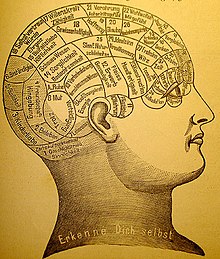
Inability to notice slow change: Humans are good at noticing something moving in the trees, but not at noticing trees growing. We are designed to pay most attention to a certain timescale relevant to our biological design and lifespan. Problems that creep up on us at larger timescales are hard for us to even notice.
Future discounting: Psychologists know humans naturally think the future is worth less than now. It's harder for us to care about things that will not unfold fully for years to come. Perhaps the selfish subtext here is, who knows if we personally will even be alive in 50 years, so why should we personally care about the state of the world at that time?
Discouragement: It is natural for people to be discouraged in the face of giant problems when they feel they have little leverage. The interlinking of all these other reasons contributes to the perception that this giant tangled knot is too big to solve, so there is no point putting personal energy into it.
Cultural

Sheep Syndrome, Lifestyle Inertia: Most people aren't used to trying to change the course of things. And they are not good at voluntarily changing their lifestyle, on either personal or collective levels.
No precendent: This type of scenario has never occurred before. In the past, spoiling one's territory was never truly fatal, since there was always somewhere else to go. But with the crisis is at a global scale, there is no where else to go. There is no cultural playbook for this type of scenario. This is the first time that we must work together as a species to avoid mutually assured destruction. We have to overcome thousands of years of competitive conditioning to save the commons.
Ignorance: Many people are still not aware of the certainty and ugliness of the expected outcome. Even people who do say they care about the issue, may not be able to fully visualize what the expected outcome for the planet will be in, say, 50 or 100 or 200 years from now.
Magical thinking: Some religious people assert that environmental destruction is not a concern, or is even desirable. For example, those who believe in the Rapture.
Excessive Consumption: Our modern lifestyle requires more energy than ever before, and more people than ever before are acquiring vehicles and appliances. Meat production eats up vast agricultural resources.
Political

Political structures: Current political structures (non proportional representation for example) make these issues harder to gather will for.
Propaganda, Misinformation, Corruption, Corporate influence on policy: Industries that benefit from the status quo, use and abuse their power to influence populations, leaders, and policy.
Business
Discounting the commons in the price of products creates perverted incentives. For example, the price of products does not include the environmental cost of pollution from manufacture and shipping.
Financial markets focus on quick gains at the expense of the long-term.
Competitive pressures make environmental choices relatively more expensive.
Industry already has a massive investment in dirty, inefficient technology.
 |
| Fusion power holds promise but remains a distant goal |
Transitioning the world economy to clean power is not going to be easy. The sheer size, vast cost, and scope of new science and engineering required to clear this hurdle itself discourages change. Vast political will must be brought to bear to affect meaningful change.
Ok, Now what?
Many people care about the crisis, and are taking a variety of approaches to contributing to solutions. However it is rare that anyone addresses the whole tangled knot. Generally, environmentalists, activists, and concerned citizens focus just on one aspect, and then get discouraged when they realized progress is much harder than expected due to the entangled issues.
Now that we have looked at a broad range of reasons for the lack of will to tackle the environmental crisis, we can start looking at solutions in a coming post. Stay tuned, and lets shine some light to make a brighter future!

No comments:
Post a Comment